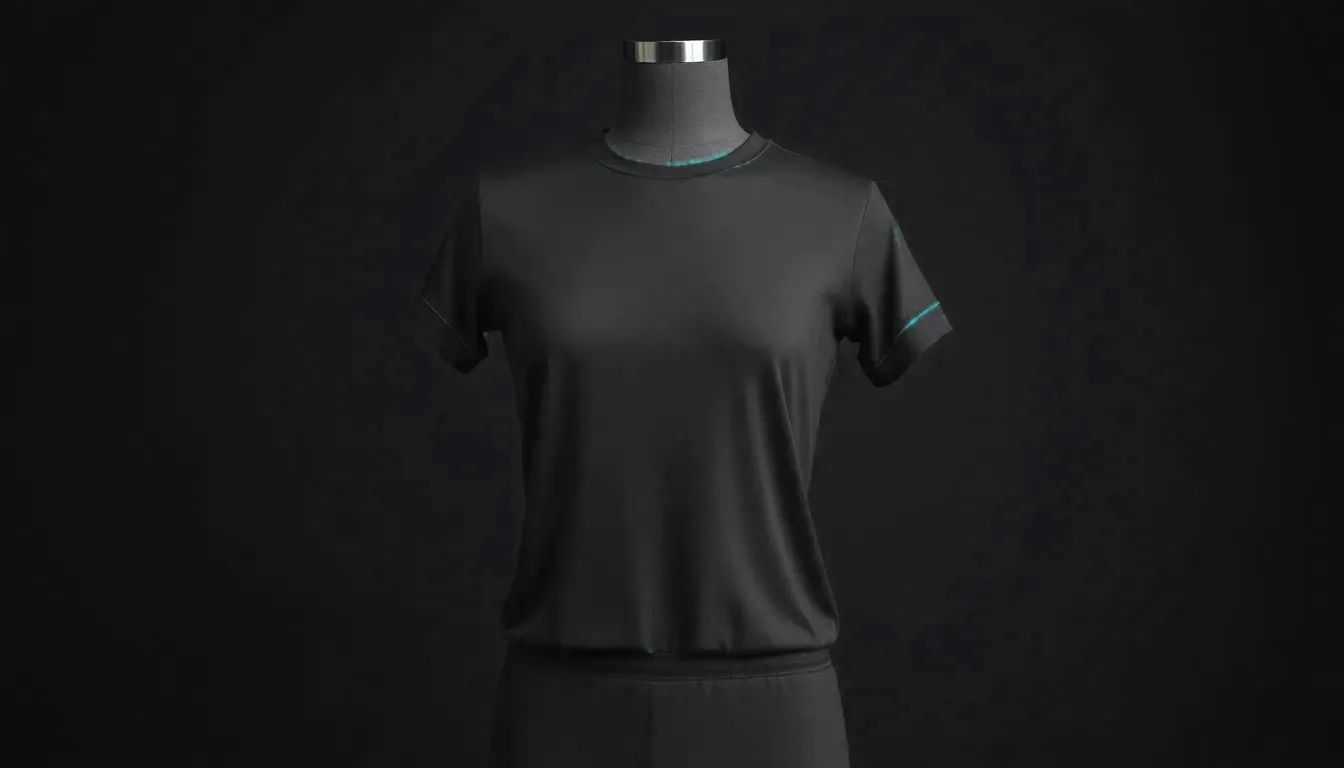
Four tops in, and the failure is the same each time. A medium fits fine at the mirror, then rides up on the first spin. A large stops the ride-up but adds enough loose fabric to catch on a partner's arm mid-frame. You keep changing sizes and brands, and the shirt still gives out at the same moment, an underarm turn or a dip, three hours into a social once the fabric is wet through.
None of those tops failed because of the number on the tag. They failed at the construction stage. The shoulder seam sat in the wrong place, the armhole didn't let an arm travel overhead, the torso was cut too short or too long, the hem was built to hang instead of grip, the waistband sat wrong against the skin. Five decisions decide whether dance apparel fits, not a size. Know what each one is supposed to do, and you stop guessing at sizes and start checking the garment itself.
Dance apparel fit is decided by five construction choices, not a size on the tag: the shoulder and armhole, the torso length, the sleeve, the hem, and the waistband or tuck. Each one has a shape it should hold standing still and a specific way it fails once you start moving. Check all five before you buy and the guesswork disappears.
How should dancewear fit?
Dancewear should sit close enough to move as one piece with the body, and loose enough that a joint can reach its full range without the fabric fighting back. At rest, that means no pulling at the shoulder and no clinging across the ribs or waist.
In motion, it means the fabric travels with a reach or a spin and then returns to where it started once the movement stops. That return is the part most tops skip. A dance top spends more of its life moving than standing still, so fit has to be judged against what a partner-dance floor actually does to a garment, not against how it looks in a fitting room mirror.
Five decisions decide the fit, not the size on the tag
A size chart measures a body standing straight with its arms at its sides. Partner dance never asks a body to hold that position for more than a few seconds at a time. So the number on a tag can only ever be a rough starting point. What actually decides whether a top survives a social is five choices made at the construction stage, each answering a different question about how the body moves in frame.
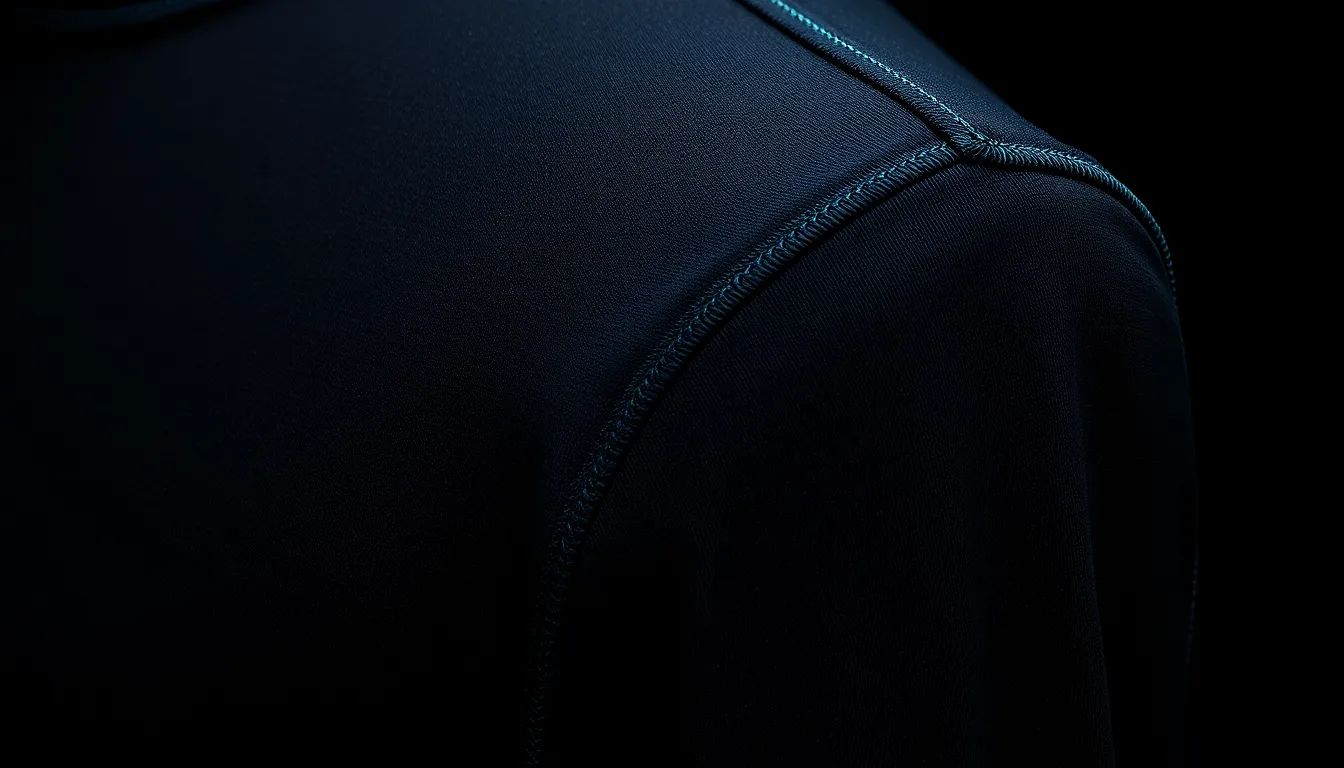
The shoulder and armhole decide how far an arm reaches overhead and across the body before the seam fights it. The torso length decides how much fabric is left in reserve for a lean or a twist before the hem starts climbing. The sleeve construction decides whether a forearm turning inside frame drags fabric with it or lets it go. The hem construction decides whether the shirt returns to place after a spin or stays hiked up for the rest of the song. The waistband or tuck decides whether that returned hem actually stays down once it gets there.
Walking through all five on one garment, shoulder to hem, is its own piece of work. The short version is that a top built right on all five stops being something you think about once the music starts. The full walkthrough, decision by decision on a single shirt, is in how a dance top should fit.
| Fit decision | At rest | How it fails mid-dance | What to check when trying it on |
|---|---|---|---|
| Shoulder and armhole | Seam sits at the joint, no pull at rest | Pinches or drags when an arm goes overhead or crosses the body | Raise both arms overhead and reach across your chest before deciding |
| Torso length | Skims the body with a little room left at the ribs | Climbs and stays up after a lean or a twist | Twist and lean back to see where the hem goes |
| Sleeve construction | Drapes close without gripping the forearm | Bunches at the elbow or drags fabric during an underarm turn | Turn the forearm inside an imaginary frame and extend the arm fully |
| Hem construction | Falls level or slightly longer at back, no curling | Rides up during a spin and does not fall back into place | Spin once on the spot and check if the hem returns |
| Waistband or tuck | Sits flat, wide enough that it does not dig in | Rolls or digs in at the waist, tuck releases mid-song | Sit, then stand and reach overhead with the tuck still in |
Why sizing alone cannot predict dance fit
A size chart is built from a body standing still with its arms at its sides. It cannot tell you whether a fabric will hold its shape once that body reaches overhead in frame for the fortieth time in a night. What predicts fit better than a size number is how much a fabric stretches and how well it recovers afterward, weighed against how much smaller the garment is cut than the body wearing it.
That match, cut against recovery, decides whether a snug top feels supportive or just restrictive by the second dance. The full breakdown, including how to size a dance top before it fails rather than after, is in dancewear sizing: why fit fails mid-movement.
How tight the fit should actually be
Tightness is its own decision, separate from size. Compression fabric holds a muscle down and traps heat against the skin, useful for short bursts, less useful across a six-hour social. Fully loose fabric solves the heat problem and creates a new one: it bunches exactly when a spin twists it, and a hem with nothing holding it down climbs and stays there.
The middle that actually works on a dance floor is a slim cut built on four-way stretch fabric, snug enough to move with the body, with enough room left at the shoulder and armhole that overhead reach never fights the fabric. That is a cut decision and a fabric decision at once, and it is the brief the Corda was built against.
The full comparison is in compression or loose: which fit works on the floor.
None of that middle ground exists without the fabric doing its share. A blend has to stretch enough and recover fast enough that a slim cut stays a comfortable one instead of turning restrictive after the first stretch. What that blend is actually made of is covered in the best fabric for dance clothes.
Construction choices that have nothing to do with size
What a garment uses to close, or doesn't, is also a construction decision, and on a dance floor it is a safety one as much as a comfort one. A zipper pull or a button sits fine on a shirt designed for a desk. In close hold, that same hardware presses into a partner's back or catches on contact during a turn. The full reasoning, including what replaces a zipper when there isn't one, is in why we made a shirt with no hardware.
Sleeve length is a separate choice again, more about heat and coverage than about fit precision. A tank maximizes airflow at the cost of bare-arm contact in close hold. A long sleeve gives up a little heat for a cleaner line and no arm-on-arm slip. Which one is right depends on the room and the night. That comparison is in long sleeve, tank, or tee: what to dance in.
What to check before you buy
Buying dancewear does not have to mean guessing and hoping. Before checking out, try the garment through the same load a social will put on it.
Raise both arms overhead and reach across the chest. Rotate at the waist and lean back like you are catching a dip. Spin once on the spot. Then go from sitting to standing with your arms overhead, and see whether anything tucked stays that way.
A top that survives all four checks does not need weeks of guessing and returns to prove itself. It shows you on the first try.
That is the same standard the Corda was cut to meet, arms overhead first, because a shirt that fails standing in a fitting room will fail again on the floor, just later and with an audience.
What changes once you stop guessing
None of this requires becoming a garment expert. It just requires a few minutes with your arms overhead in front of a mirror before you pay, instead of finding out on the floor three songs into a social you paid to enjoy.
Once you know the five decisions to check, a good dance top stops being a lucky find. It becomes something you can identify on a hanger, before you have broken a single sweat in it. The guesswork was never really about your body. It was about buying a garment built for someone standing still, and expecting it to survive someone who never does.
Common questions
How do I test a dance top's fit before I buy it?
Raise both arms overhead and reach across your chest. Rotate at the waist and lean back. Spin once on the spot. Then go from sitting to standing with your arms overhead and see if anything tucked stays tucked. A top that holds its shape through all four is doing its job. One that fails any of them will do the same thing again on the floor.
Why does a top that fits in the mirror fail on the dance floor?
A fitting-room mirror only tests a body standing still. The construction decisions that decide dance fit only get proven in motion, under the heat of a real social. Standing still and dancing put a completely different load on the same seam.
Is a tighter fit always better for partner dancing?
No. A compression-heavy fabric traps heat and limits the reach a frame needs. Too loose, and the fabric bunches in a spin while the hem stops holding still. The fit that works is snug through the body with enough stretch and room at the shoulder that reach is never restricted.
Does sleeve length change how a top should fit?
It changes heat and coverage more than it changes fit itself. A tank removes the sleeve question by removing the sleeve. A long or short sleeve still needs an armhole and cuff that let a forearm turn freely inside frame. Which length to choose is a heat and coverage decision more than a fit one.
What is the one construction detail worth checking first?
The shoulder and armhole. If a top pinches or drags the moment an arm reaches overhead, no other decision saves it, because that reach is also the most common movement in partner dance. Check the shoulder first, then work down the rest of the list.