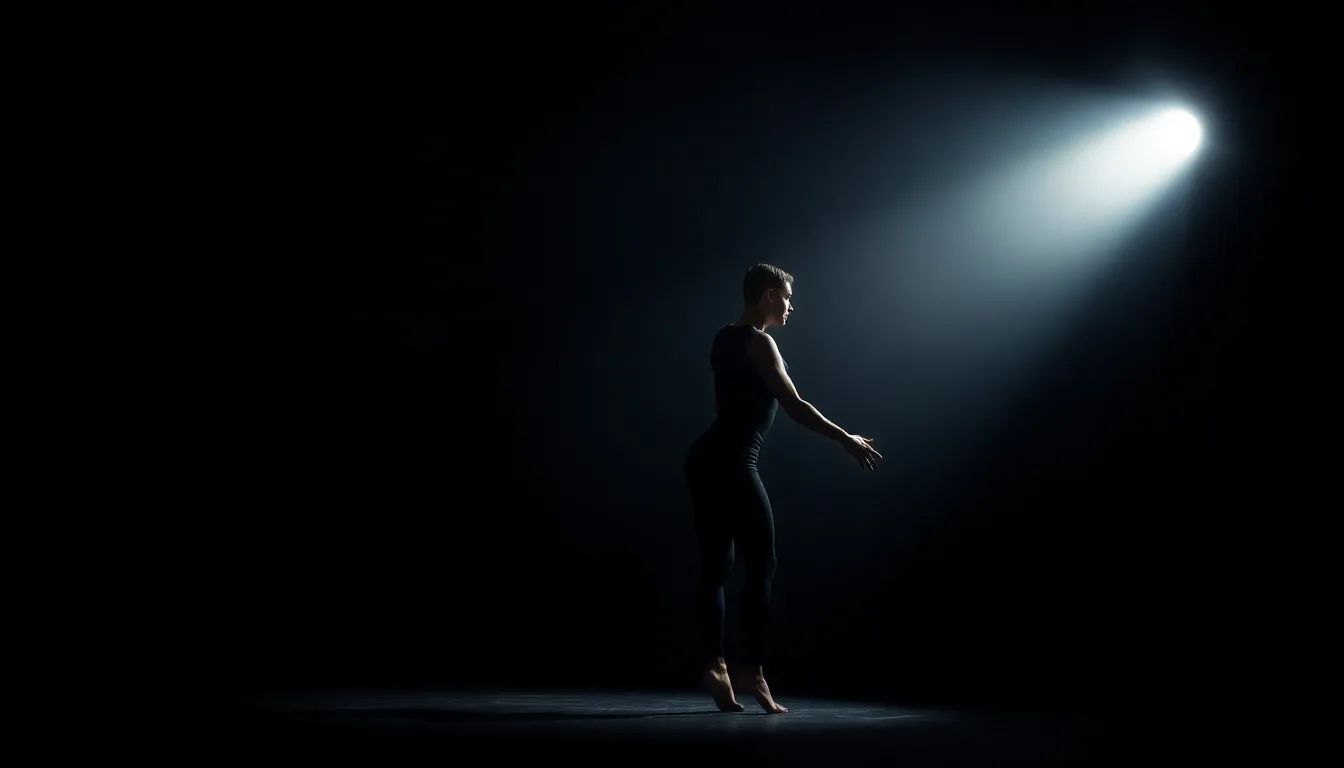
The spotlight finds everything. Under house lights you look fine. Step into a hard stage light or a phone camera at the front of the floor, and the same outfit can shine like plastic, cling where it sags, and broadcast a wet back to the whole room. The shirt did not change. The light did, and it tells the truth.
Whether it is a showcase, a competition, a jack and jill final, or just the moment everyone films, dressing for bright light is its own skill. The rules are different from dressing for a dim social, and most dancers learn them the hard way, on camera.
Here is how to look good under the spotlight: the colours that hold, the cut that flatters under hard light, and the fabric that refuses to betray you when it matters most.
What should I wear to look good on stage or under bright lights?
Solid, mid-to-deep colours, a clean fitted cut, and a matte performance fabric. That combination reads sharp from the back row and on a phone screen. Loud patterns vibrate under stage light and fight the eye, shiny fabric blows out into a white smear under a spotlight, and anything loose loses your lines exactly when the room is looking. Simple and fitted wins on camera almost every time.
The colours that hold under a spotlight
Deep solids hold their shape under light: charcoal, navy, deep teal, burgundy, forest. They stay rich rather than washing out, and they hide sweat far better than pale shades, which is half the battle under hot lights. Pure white can work as a deliberate statement but it blows out and shows everything. Black reads clean but can flatten into a silhouette under a single hard source. We went deeper on the whole question in the best colours to wear for dancing, which applies double under a spotlight.
Cut and fit: the camera reads your lines
Under bright light a camera reads your silhouette before anything else, so the cut does more work than the colour. The Swing Literacy guide to competition wardrobe makes the balance clear: too tight restricts movement and reveals everything under the lights, while too loose flaps and hides your lines. Fitted but not skin-tight is the target, clean through the shoulder and torso so every extension shows as a line rather than a wrinkle. The spotlight rewards shape and punishes fuss.
Matte beats shine on camera
Cheap, high-shine synthetics look fine in a mirror and then catch a hard light and flare into a bright smear, drawing the eye to a hot spot instead of to you. A matte or lightly textured performance fabric absorbs light cleanly and reads premium on camera. This is a fabric decision as much as a styling one, and it is covered in our guide to the best fabric for dance clothes. For the spotlight specifically: matte finish, deep colour, no plastic sheen.
The sweat problem under hot lights
Stage lights are hot, and nerves make you sweat more, so the spotlight is where a wet shirt shows worst. A wicking fabric in a sweat-hiding colour is the difference between looking composed and looking drenched in every photo from the night. This is the clearest case of why your dance clothes are performance equipment, not decoration. The garment is doing real work the moment the light hits you.
This is exactly the moment the Corda is built for: a matte, deep-toned, wicking performance fabric cut slim to read clean on camera. Apparel that looks as composed under a spotlight as it feels in the dark.
Common questions
What should I wear to look good on stage dancing?
A solid deep colour, a fitted but not tight cut, and a matte wicking fabric. That reads sharp under bright light and on camera. Avoid loud patterns, shiny fabric, loose fits, and pale colours that show sweat.
What colours look best under stage lights?
Deep solids: charcoal, navy, deep teal, burgundy, forest. They hold their richness, flatter on camera, and hide sweat. Pure white and pale shades blow out and show everything under a hard light.
Should dance competition clothes be tight or loose?
Fitted but not skin-tight. Too tight restricts movement and reveals everything under bright light. Too loose flaps and hides your lines. Clean through the shoulder and torso is what the camera rewards.
Why does my shirt look shiny in dance photos?
High-shine synthetic fabric catches hard light and flares into a bright spot. Choose a matte or lightly textured performance fabric, which absorbs light cleanly and reads premium on camera.
Written by a Qanvero westie. We have watched the video back and seen the shiny shirt, the wet back, and the outfit that vanished under the light. We dress for the spotlight now. The brand is by dancers, for dancers.
Stage lighting exposes what ordinary room light forgives. What to wear for partner dancing covers the choices that hold up under both.