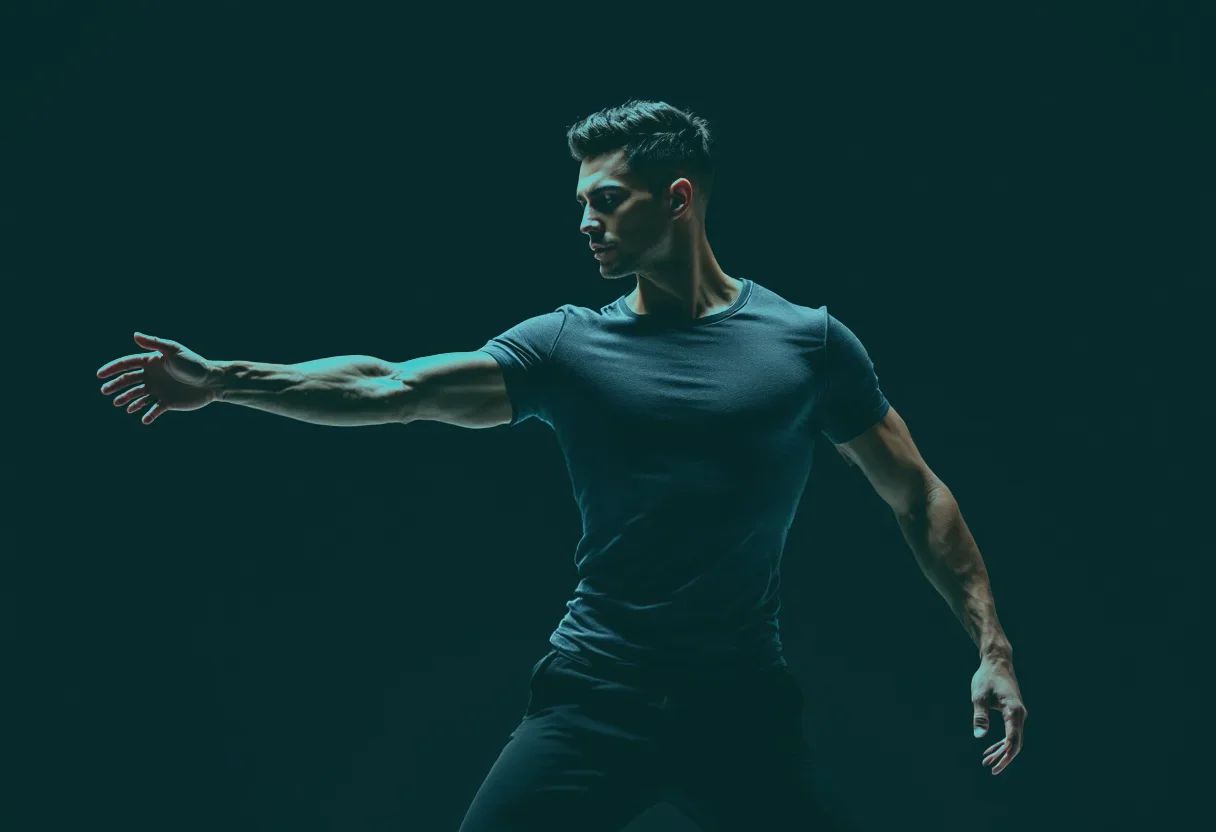
You searched “what to wear to a dance social” the night before your first one and bought whatever came up first: a fourteen-dollar tank top from a fast-fashion site, tagged athletic because the model in the photo happened to be jogging.
That shirt will not fail because of the price or the cut. It will fail because of what it is made of, and by the second hour on the floor you will know exactly why. This is the buying guide for a first social: the fabric that actually holds up, the fit that works once a partner's hand is on it, and the one extra item worth packing before you own anything else.
What to wear to your first social: the short answer
A synthetic stretch top, nylon or polyester blended with a little spandex or elastane, beats cotton every time on a partner-dance floor. Look for a fabric weight around 200 GSM or higher and a cut that sits close to the body without gripping it, not the loose tee from your gym drawer and not a compression layer either. Skip anything with a zipper, button, or hard trim near the torso, since a partner's hand or a turn will find it. If the social runs past two or three hours, one spare top in your bag is the only extra you need. The sections below cover why, garment by garment.
Skip the cotton, even if it is your favorite shirt
Cotton feels like the safe choice because it is the fabric already in your drawer, not because it works on a dance floor. It absorbs sweat into the fiber itself, so the shirt gets heavier as the night goes on and turns cold and clingy the moment you stop moving between songs. A synthetic blend behaves the opposite way. Nylon and polyester are hydrophobic, so sweat sits on the surface of the fiber and evaporates instead of soaking in, which keeps the shirt lighter and lets it dry out between dances.
Fabric weight is measured in GSM, grams per square meter, and it tells you roughly how a shirt will hold up under load. A fabric-weight guide for apparel brands puts summer-weight cotton at 120 to 160 GSM and winter-weight cotton at 200 to 300 GSM. A synthetic dance top built around 200 to 240 GSM sits inside that heavier band on purpose, built to hold its shape through a spin rather than just look good folded on a shelf.
Fit: not baggy, not compression
Fit fails a first social in two directions. Too loose, and the extra fabric bunches under a partner's hand or catches mid-turn. Too tight, and a compression cut restricts the reach a lead or follow needs and runs hot with no air gap against your skin. The workable middle is a slim cut with stretch built into the knit, not a size down squeezed on for effect.
If you are choosing between two shirts and cannot try either one on first, our full comparison of compression and loose fits scores both extremes against what a real floor actually demands.

The one thing worth packing
You do not need a bag of options for a first social. One reliable top, and a spare if the night runs past two or three hours, covers almost everyone's first time out. Sweat becomes the deciding factor once the room fills and the air conditioning falls behind the crowd, which arrives closer to hour one than most beginners expect. Our sweat-specific shirt guide breaks down the picks that hold up longest, by climate and by how heavy a sweater you run.
Qanvero built the Corda around exactly this brief: a 220 GSM stretch blend with flatlock seams and no zipper or button anywhere near the torso. It is one shirt, not a wardrobe, built to be the one you stop thinking about once the music starts.
For the fuller picture, footwear, sizing, packing for a full weekend, and how the brief changes for competition, our complete guide to what to wear for partner dancing runs the whole checklist.
Common questions
What should I wear to my first west coast swing social?
A synthetic stretch top rather than cotton, at a weight of roughly 200 GSM or higher, cut close to the body but not compression tight. Bring one spare top if the social runs past two or three hours. Skip anything with a zipper, button, or hard trim near the torso. The same call holds on a salsa floor or a bachata room. The physics of sweat and spins do not change with the music.
Do I need special shoes for my first social?
Not dedicated dance shoes on night one. A clean, low-grip sole, sneaker or flat, is fine while you are finding out if you like the floor. A heavy rubber tread grabs during a turn and forces the twist up into your knee, so save the running trainers for running.
Can I wear cotton to my first social?
You can, but it will not hold up as well. Cotton absorbs sweat into the fiber and gets heavier and colder as the night goes on. A nylon or polyester blend pushes sweat to the surface to evaporate instead, so it stays lighter through a longer night. Our sweat-specific shirt guide covers the picks worth buying first.
Should I buy compression wear for my first social?
No, not true compression. A close, stretch cut lets you extend and turn properly, where compression restricts that reach and traps heat against your skin with no air gap. Our comparison of compression and loose dancewear breaks down the full case if you are deciding between fits.
How many outfits do I need for one social?
One. A single reliable top gets most people through a first social. If it runs past two or three hours, pack one spare same as anyone else on the floor, and only add more than that if you are staying on for a second event the same day.
Written by a Qanvero westie. I bought the wrong tank top for my own first social and spent the second half of the night peeling a wet shirt off my back between songs. By dancers, for dancers.