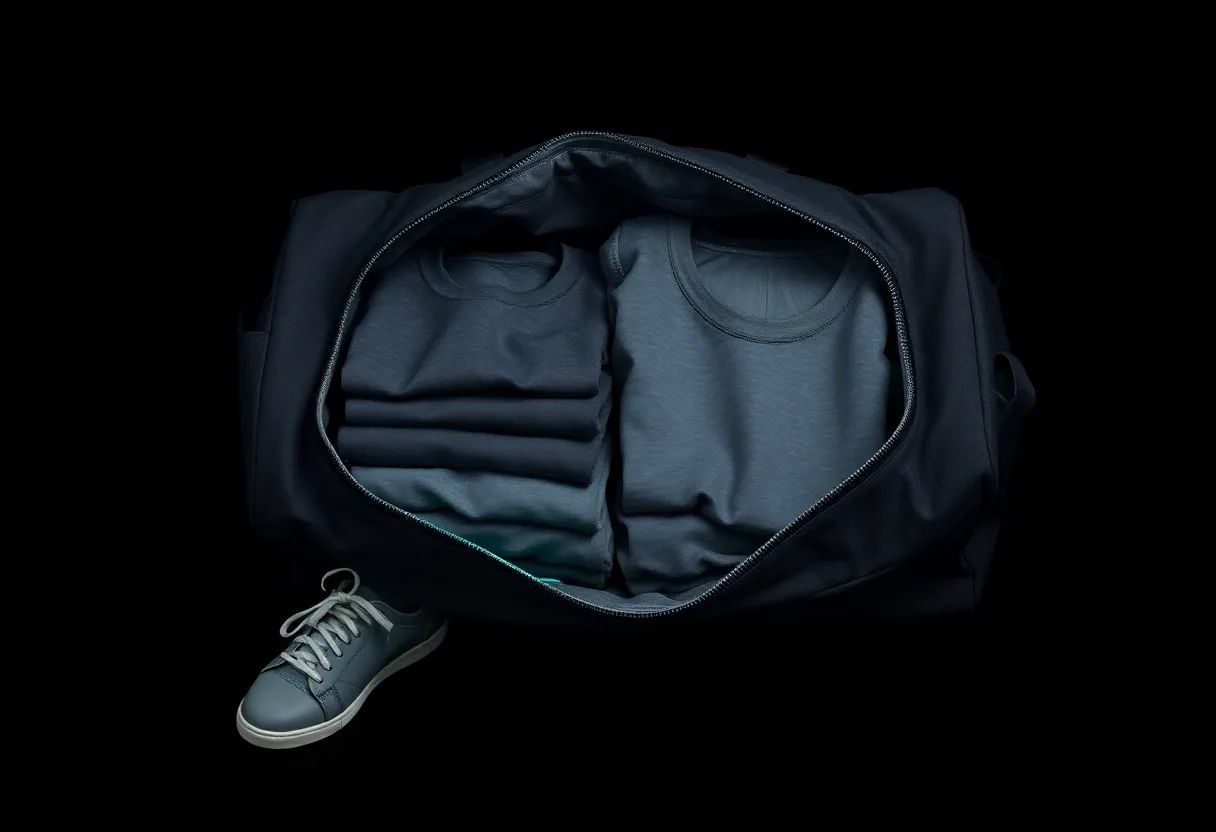
Two tops looked like plenty on Wednesday night, folded into a carry-on for a three-day West Coast Swing weekend. By the second social on Saturday, one top was already balled up damp at the bottom of the bag, and the other was thirty minutes from the same fate, with a full day of dancing still ahead.
The right count isn't a guess based on how many days an event runs. It comes from floor hours, not calendar days: roughly one top per three hours of continuous partner dancing, which works out to two tops for a single day, three to four for a two-day weekend, and four to six for a three-day festival if at least one top gets rinsed and dried overnight. The rest of this piece runs the actual math and the fabric mechanics behind that number.
This is the packing chapter of our complete guide to what to wear for partner dancing, worked out in full here.
Count floor hours, not days
A three-day festival schedule looks like three units on the timetable, but the floor doesn't divide that cleanly. A Friday night social might run four hours start to finish. Saturday often stacks a full day of workshops onto an evening social that runs past midnight, six or seven hours of combined floor time in one day alone. Sunday usually tapers, a shorter day session and a closing social that wraps early. Add it up and a typical three-day weekend puts a dancer through somewhere between 18 and 24 hours of actual partner contact, not three days' worth in any normal sense of that phrase.
The three-hour swap point
Sweat load on a top is the real trigger for a change, not the time on a clock. A synthetic stretch top holds up cleanly for roughly three hours of continuous partner dancing before it's carrying enough moisture to feel heavy and read to a partner's hand. Past that point the fabric does less work. Wicking slows as the surface saturates, and cling starts against the skin. Divide the floor-hour total for a weekend by three and the number of top changes needed turns into an actual number instead of a guess. A 20-hour weekend needs roughly six to seven swaps if nothing gets reworn.

Why a rinse cuts the count in half
Six or seven fresh tops is more luggage than most dancers want to carry, and it doesn't have to be the real number. A synthetic top rinsed in a sink dries in roughly one to two hours, against four to eight hours for a cotton top doing the same job, according to a comparison of fabric drying times from outdoor apparel brand Lone Creek. That gap is the entire reason a rinse-and-rewear cycle works on a synthetic top and fails on a cotton one. Rinse a top after Friday's social and hang it by a window overnight. It's dry and back in rotation before Saturday's workshops start.
That only works with a fabric built to wick in the first place. Our guide to the best sweat-wicking shirts for social dancing breaks down which fabric blends dry fast enough to make a rinse cycle realistic mid-festival. A quick sink rinse is not a substitute for a real wash, though. Skip fabric softener and any hotel bar soap not meant for delicates, since residue clogs the channels that let the fabric wick. Wring gently rather than twisting, then hang the top away from direct heat or sun. Our full care guide runs the complete routine for keeping performance fabric working past one rinse and into a full season.
The packing count, by event length
A single-day intro social needs two tops, one to wear and a spare for anything past three hours. A two-day weekend without an overnight rinse needs three to four. A three-day festival lands at four to six tops if at least one overnight rinse is in the plan, and closer to seven or eight without one. Pack for the version of the weekend where a workshop runs long or turns into an impromptu extra session, not the version printed on the schedule.
The math gets easier when every top in the bag dries at a predictable rate instead of an unknown one. The Corda runs 220 GSM with four-way stretch, built with the same rinse-and-hang cycle in mind, so four Cordas cover most three-day festivals with one clean rinse night built into the middle of the trip.
Common questions
How many outfits do I need for a dance weekend?
Two tops cover a single day. A two-day weekend needs three to four. A three-day festival needs four to six if one top gets rinsed and dried overnight, and closer to seven or eight if none does. The trigger for a change is roughly three hours of continuous partner dancing, not the number of days on the calendar.
How do I know when to change my dance top?
Roughly every three hours of continuous partner dancing, once the fabric is carrying enough sweat to feel heavy and cling against the skin. Clock time matters less than how saturated the fabric has gotten, so a slower night can stretch a top further and a hard one can shorten it.
Can I rinse and rewear a dance top overnight?
Yes, if the top is a synthetic blend built to wick. Polyester and nylon tops dry in roughly one to two hours after a rinse, fast enough to be ready for the next day's dancing. A cotton top takes four to eight hours for the same job, which usually isn't dry by morning.
Is cotton okay for a dance weekend?
For a single short session, yes. Across a multi-day event it becomes the harder choice, since cotton absorbs moisture into the fibre instead of pushing it to the surface, so it stays wet longer and won't dry fast enough overnight for a rinse-and-rewear cycle. Anyone packing cotton for a festival should plan on more spares, not fewer.
What's the fastest way to pack fewer tops for a multi-day event?
Pack synthetic stretch tops built to wick, and plan on rinsing at least one overnight rather than carrying a fresh top for every floor block. That single habit is usually the difference between four tops and seven for the same three-day festival.
Written by a Qanvero westie. We have run out of dry tops halfway through a festival more than once, and did this floor-hour math after the fact instead of before it. This is the version we wish someone had handed us at the start. By dancers, for dancers.