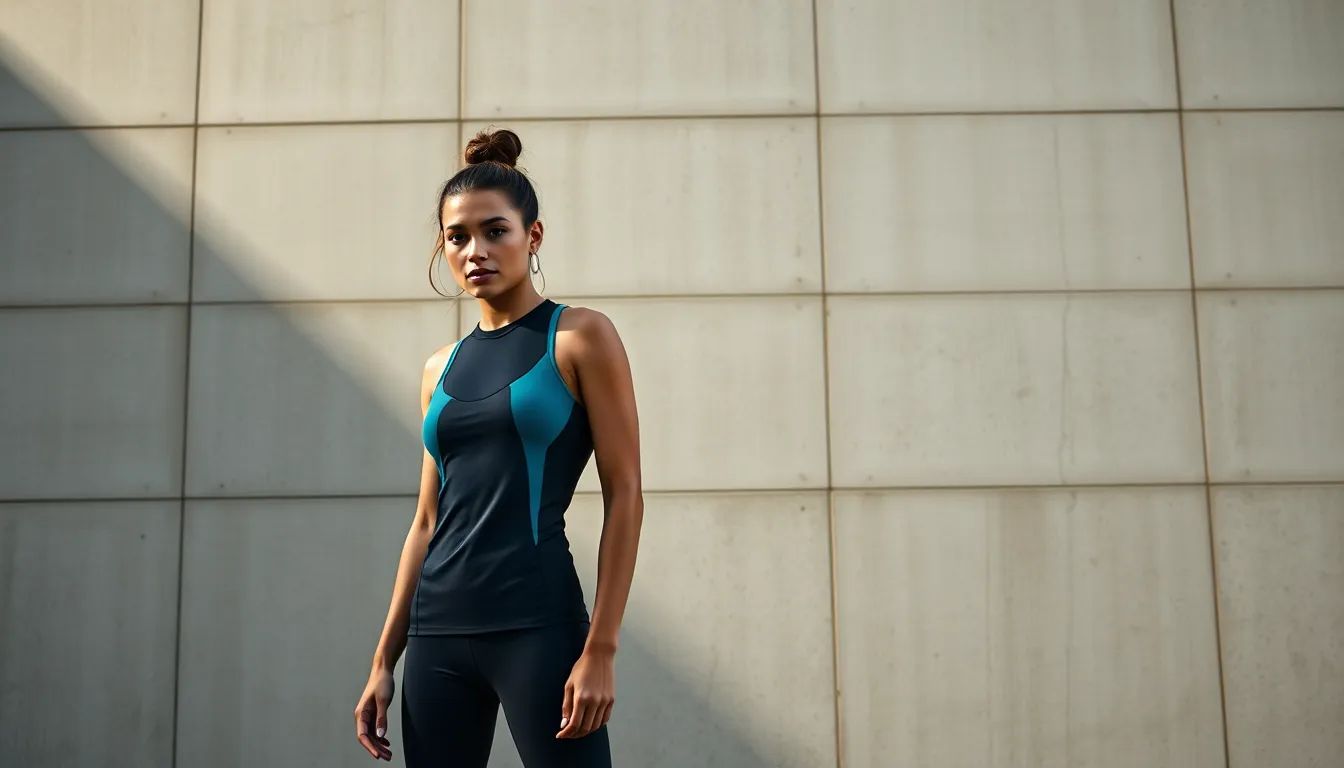
The social winds down past midnight and a group peels off for late supper. Half of them are still in the top they danced in, because a full change was never going to happen. The ones who look pulled together are wearing something that worked on the floor and still reads right under the cafe lights. The rest are in a sweat-darkened gym tee with a logo stamped across the chest.
A dance top spends maybe four hours on the floor and the rest of its life off it. The good ones are built to cross that line, holding up through the social and then passing as normal clothes the moment you step outside. That crossover is a design decision, and gymwear and studio dancewear both miss it from opposite ends.
Why most performance tops fail outside the studio
Gym tops are designed to look athletic. Big logos, sponsor-style panels, a plasticky sheen, mesh vents cut into odd places. That styling does a job inside the gym and works against you everywhere else, where it reads as just left a workout rather than dressed for the evening.
Studio dancewear has the opposite problem. A leotard or a jazz top makes sense in class and looks like a costume the second you are on the street. Neither one is something you would happily wear to dinner, which is why so many dancers carry a change of clothes they never quite find time to use.
What lets a top cross over
The tops that travel from studio to street share a short list of traits. A clean, minimal design with no loud branding. A colour that works in daily life, like onyx, charcoal, or ivory rather than a neon team shade. A cut with an actual silhouette instead of a boxy gym rectangle. A matte fabric hand that looks considered rather than plasticky.

Colour does a lot of the lifting here, and it is worth choosing on purpose rather than by default. We went through the floor-tested options in the best colours to wear for dancing. A muted, well-chosen tone reads as streetwear in a way a bright gym colour never will.
The fabric still has to do the floor job
Crossover is worthless if the top quits on the floor. It still has to wick, breathe, resist odour, and move with you through a long social in the heat. The real skill is hiding all of that performance inside something that looks like an ordinary good tee.
That is harder than building pure gymwear or pure fashion, because you are solving both problems in one garment, and most brands pick a side. A matte technical knit that performs like activewear while reading like a considered street piece is the trick, and it is the reason your dance clothes matter beyond the floor.
One top, fewer decisions
The practical payoff is simple. A top that crosses over does double duty as dance kit and daily wear, so you own fewer things and you are never caught looking like you just came from a workout. For dancers who travel to events, and Singapore socials draw people from fifty to sixty countries, it also means packing lighter for a weekend away.
That is the brief behind the Corda, a performance knit with no hardware, a slim clean cut, and a neutral colour, built to dance in and walk out in without a second thought. One top that earns its place on the floor and on the train home.
Common questions
Can you wear dancewear as everyday clothes?
The right dancewear, yes. A performance top with a clean cut, a neutral colour, and no loud branding passes as normal streetwear while still wicking and stretching underneath. Studio-specific pieces like leotards do not cross over, but a well-designed technical tee does.
What makes a top look like streetwear instead of gym wear?
Restraint, mostly. No big logos or sponsor panels, a matte fabric rather than a shiny one, a real silhouette instead of a boxy cut, and a daily-wear colour. Those choices read as dressed rather than as fresh from the gym.
Are performance fabrics ok for everyday wear?
Yes, and many people wear them daily without thinking about it. A matte technical knit is comfortable, breathable, and low-maintenance off the floor. The thing to avoid for everyday use is the glossy, heavily vented gym look, which is about styling rather than the fabric itself.
What should I wear to a social I can also wear afterward?
A slim technical top in a neutral colour with no hardware and no loud branding. It performs through the social, then reads as normal clothes when the group heads out after, so you skip the change entirely.
A dance top that only works on the floor is half a garment. The night does not end when the music stops, and the best tops know it, carrying from the studio to the street without a costume change in between.
Qanvero designs for both halves of the night, the dancing and everything after it. If you want one top that performs through the social and still looks right walking out, start with the Corda.
Written by a Qanvero westie. We have gone straight from a social to supper in the same top more times than we can count. The brand is by dancers, for dancers.
A top that works in both places has to satisfy the harder brief first. The complete guide to what to wear for partner dancing sets out what that brief actually asks for.