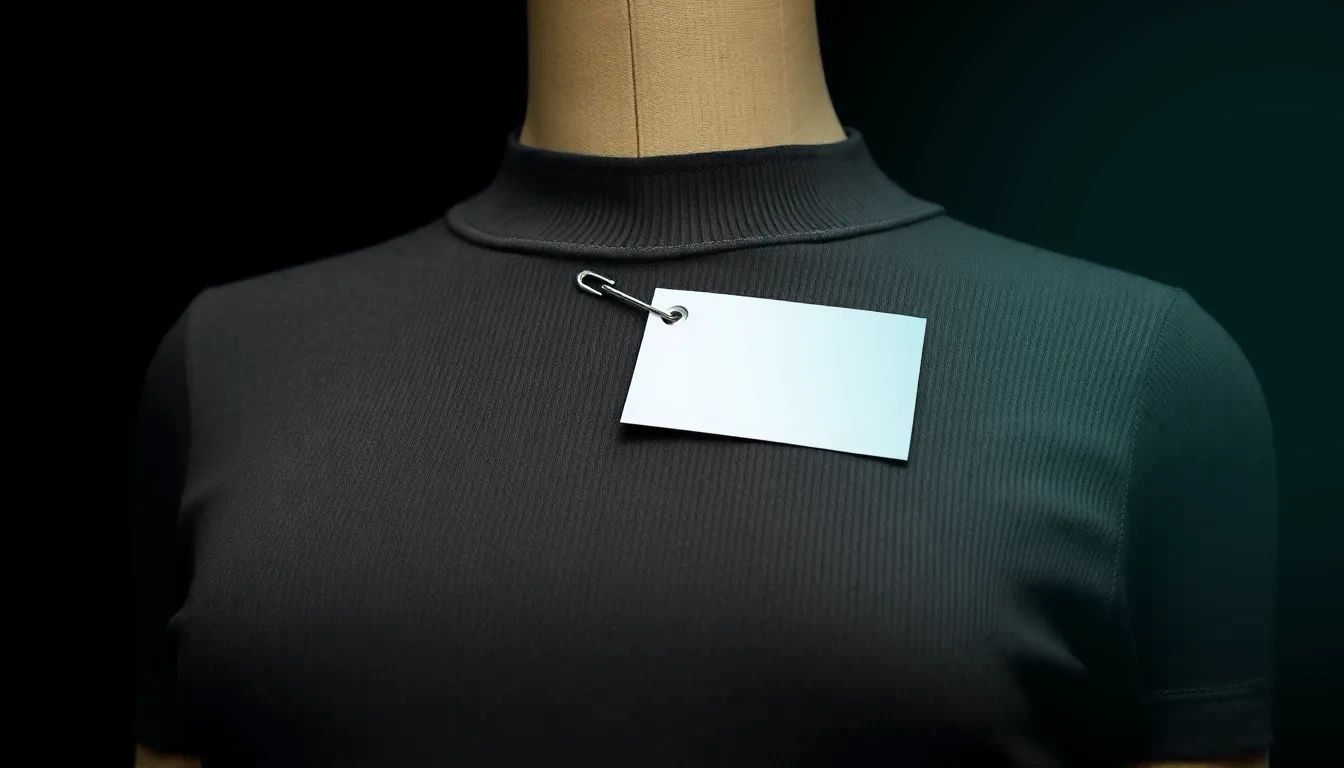
A West Coast Swing Jack and Jill prelim starts in ten minutes, and a dancer is pinning a number to the front of a brand-new stretch top, straight through the open panel below the collarbone, because that is where the volunteer handed it to them and where everyone else in line is doing the same thing. The number holds through prelims. By finals, the pinhole has become a run half an inch long. By the time the shirt comes off that night, it is a slit two inches down the chest.
The shirt did not fail because of the pin. It failed because of where the pin went. A stretch knit is built from thousands of interlocked loops, and a puncture in the open body of the fabric gives that structure exactly one place to unravel from. Move the same pin six inches to a seam, or skip the pin entirely, and the same fabric survives the same round without a mark.
A safety pin through an open panel of stretch knit is the riskiest way to attach a competition number. That panel is a chain of interlocked loops with nothing to stop a hole from growing once it starts. Pin through a seam or a waistband instead, where the fabric is already stitched down, or skip the shirt's fabric entirely with a magnet or a base layer. The method matters more than the brand of pin.
How to attach a competition number without ripping your shirt
Pin through a structural point on the shirt, never through an open panel of the body fabric. A seam allowance or a waistband is already multiple layers of fabric stitched together, so a pin there has no loose loop to catch on. An open front or back panel is a single layer of knit, and that layer is exactly what a pin puts a hole in. It is the same kind of construction question covered across how dance apparel should fit, just answered for one more accessory dancers actually wear.
If a placement rule genuinely requires the number to sit on open fabric, feed the pin back through the number's hole a second time before closing it, rather than passing through once. That second pass anchors the tension against the number itself first, not against a single point of the shirt. It is a small detail, and it is exactly the kind of thing a proper guide to pinning a competition number covers step by step. It also matters more than it used to, because competition numbers are commonly laminated now so they survive a full round without tearing, which means a number that catches on something mid-turn pulls on the shirt before it gives way itself.
Why a small hole becomes a two-inch tear
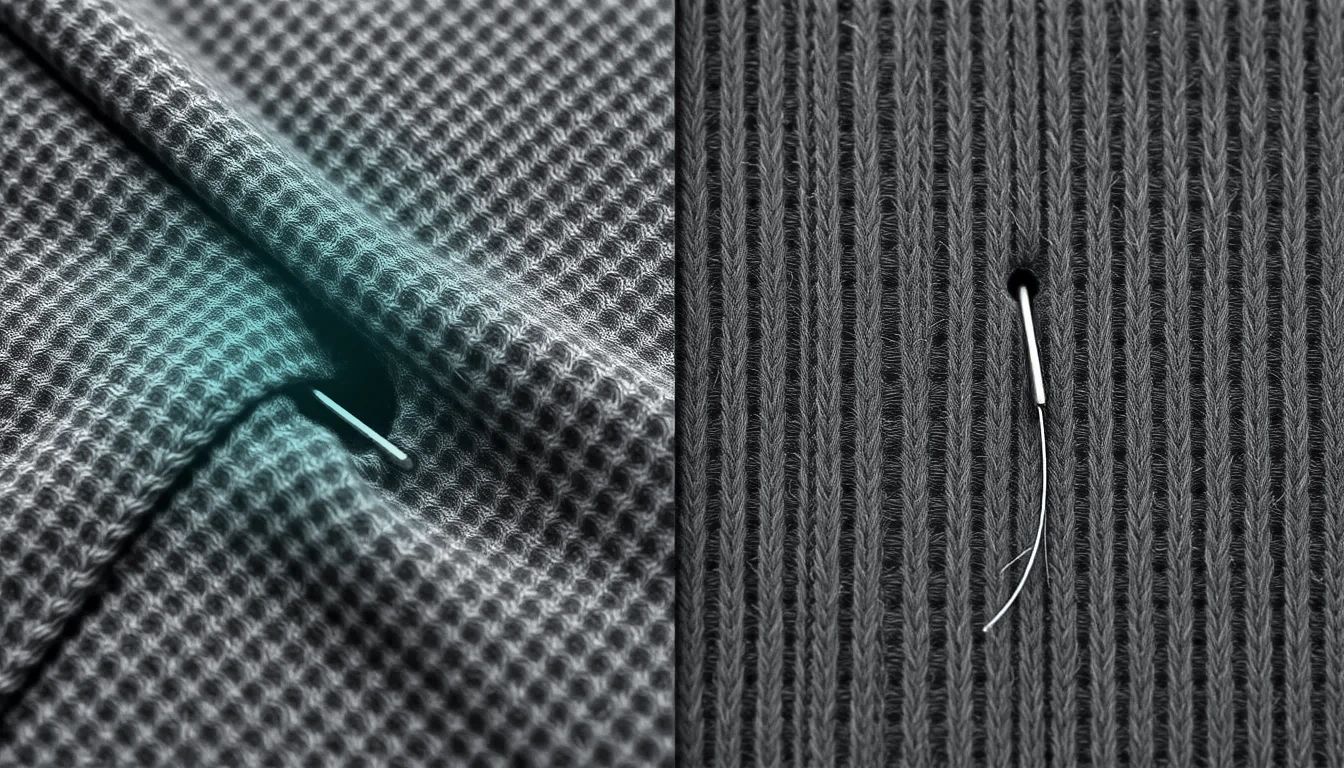
A woven fabric, like the cotton in a dress shirt, is threads crossing at right angles. Cut a small hole in one and the damage generally stays where you made it. A knit, the stretch jersey almost every dance top and competition number gets pinned to, is built differently. It is rows of interlocking loops, each one holding the next one in its column. Break one loop, and the ones below it are no longer held in place.
Under the tension a body puts on a shirt mid-spin, a broken loop can travel, turning one pinhole into a run the same way a snag runs up a stocking. This is a real, studied mechanism, not a scare story. A recent physics paper on knitted-fabric failure describes laddering as the propagation of a break through a knit's loop structure once a stitch is cut or dropped, because of the tension already sitting in the fabric. That same tension is what a stretch knit is built to handle in every direction it moves, the four-way stretch construction covered in 220 grams, four directions. A hole is the one direction that construction was never designed for.
Five ways dancers attach a number
Every method for attaching a number trades security against risk to the fabric differently, and none of them is wrong for every situation. Score each one against three things: what it does to the fabric, how it holds up once the room heats up, and what kind of shirt or event it actually suits.
| Method | What it does to the fabric | How secure through the heat | Best suited to |
|---|---|---|---|
| Safety pins | Punctures the open knit; can start a run under tension | Holds well at first; loosens over a long night | Any fabric in a pinch; riskiest on stretch knit |
| Competition magnets | No puncture; clamps the number through the fabric from both sides | Very secure; does not loosen with sweat or heat | Technical knits and thin stretch fabric |
| Pin through a seam | Punctures stitched fabric, not the open knit; no loop chain to run | As secure as the seam itself; does not loosen | Any shirt with a real seam or waistband to use |
| Pin to a base layer | Never touches the competition top at all | Only as secure as the base layer's own fit | Dancers who do not want to touch the good shirt |
| Adhesive numbers | No puncture, but adhesive can pull fibres or leave residue | Weakens once the fabric is warm and damp | A single short round, not a full day of call-backs |
The seam is doing more work than the pin
A seam is already two or three layers of fabric stitched down, which is exactly why it survives a pin better than the body of the shirt does. The stitching has already done what a knit's loops do on their own, lock the structure in place, so a puncture through a seam has nowhere left to travel. A waistband or a hem facing works the same way, for the same reason.
Where a seam sits in the first place is not arbitrary either. It follows the same shoulder-to-hem logic covered in how a dance top should fit, which is why two shirts cut from identical fabric can still offer different places to pin a number safely. The Corda's flatlock seams are a plain example, stitched fabric on fabric down the side and shoulder rather than an open panel, which makes them a structurally sound pin point regardless of which shirt is actually being worn. Any dance top with a real seam offers the same option, not only this one.
When a base layer is the safer bet
A base layer sidesteps the whole problem. Pin the number to a strip of fabric worn under or over the competition top, and the shirt itself never sees a pin at all. This works especially well on a top built with no hardware at all, the same reasoning behind why we made a shirt with no hardware. There is no zipper pull or button placket for a base layer or a pin to compete with. That absence of hardware exists for a different reason, contact safety in close hold rather than numbers, but it leaves the shirt simple to attach anything to.
None of this requires re-engineering a wardrobe. It requires choosing where the pin goes before standing in a hallway ten minutes before prelims, not during it. A shirt built to hold up through the rest of a long day, the Corda included, is worth the same five minutes of thought at the number table.
Common questions
Is it safe to pin a competition number through stretch fabric?
It is safer through a seam or a waistband than through an open panel. Those points are already multiple layers of stitched fabric with no loose loop to catch on. An open panel is a single layer of interlocked loops, and a puncture there is what starts a run.
Do magnets work as well as pins for a dance number?
For most stretch knits, yes, and without a puncture at all. A pair of flat magnets clamps the number through the fabric from both sides, holding through sweat and heat about as well as a pin does. The trade-off is carrying two matched magnets instead of four safety pins, and keeping a strong magnet away from a phone or a metal buckle.
Can adhesive numbers replace pins for a competition?
For a single short round, sometimes. Adhesive backing tends to lose its grip once a shirt is warm and damp, which describes most of a competition day. Peeling it off afterward can also pull at the fabric's finish. Treat it as a backup, not a first choice, on technical stretch fabric.
What is the safest place on a shirt to put a pin?
A seam or a waistband, not the open front or back panel. A seam is already fabric stitched to fabric, so a pin there has nothing to unravel. If the number has to sit on open fabric because of a placement rule, feed the pin back through the number's hole a second time before closing it.
What should I do if a pin already left a small hole?
Stop pinning numbers to that shirt until it can be looked at properly. A small hole in a knit can sit still for months or start running the next time it is under real tension, and there is no way to tell which just by looking at it. Keep it as a practice shirt and pin the next competition top somewhere structural instead.
Does a laminated competition number make fabric damage more or less likely?
More likely if it catches on something, because laminated paper does not tear the way an unlaminated number does. When a rigid, laminated number snags mid-turn, the shirt is the only part of that connection that can still give way, which is one more reason to keep the pin on a seam rather than an open panel.