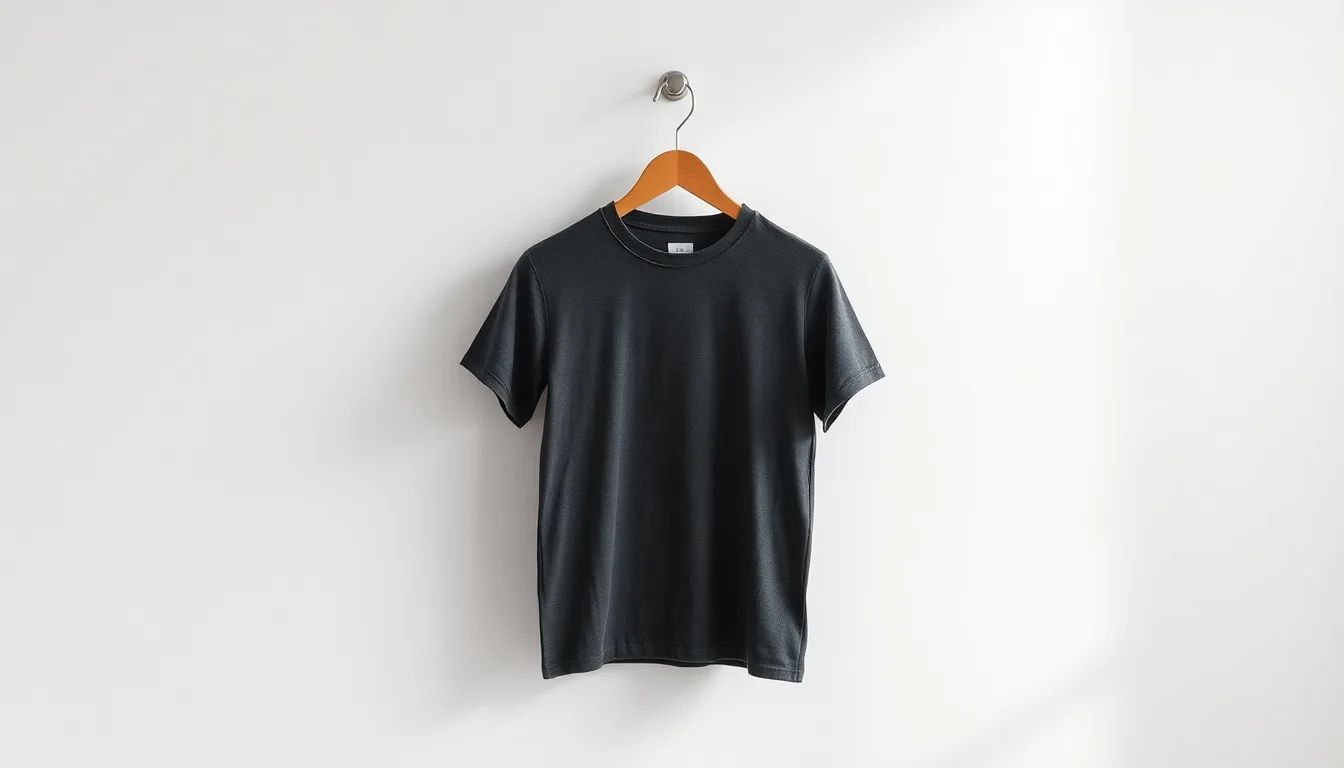
You can tell whether a shirt will survive a dance floor before you ever sweat in it. The shirt that rides up on the spin, scratches your partner, soaks through, and drags at the shoulder gave away every one of those flaws on the hanger. You just did not know what to look for.
A dance shirt is not a fashion t-shirt and it is not quite a gym top either. It has to move through full extension, stay dry over hours, sit clean against another person in close hold, and still look good doing it. Most shirts are built for one of those jobs and fail the rest.
Here is the checklist for the best dance shirt: five things to check on every garment, in order of how much they matter. It works for any vigorous activity, but dance is the hardest test, so a shirt that passes here passes anywhere.
What should I look for in a dance shirt?
Five things, in this order: four-way stretch, moisture-wicking fabric, the right weight, clean seams with no hardware, and a slim fit. Notice that four of the five are about construction, not looks. The look is the easy part. If you only remember one rule, start with the fabric, which we ranked in full in our guide to the best fabric for dance clothes, then work down this list.
Four-way stretch
A dance shirt has to move in every direction at once. Two-way stretch flexes side to side. Four-way stretch flexes side to side and up and down, which is what a reach overhead or an extension down the slot actually demands. The Shba Movement guide explains why spandex is the fibre that delivers this, stretching several times its length and recovering its shape. Check the label for spandex, elastane, or Lycra in the blend. No stretch fibre means no real stretch, no matter how soft the shirt feels.
Moisture-wicking fabric
The shirt has to move sweat off your skin, not store it. That means a hydrophobic synthetic base, polyester or nylon, which the Or Basics fabric guide confirms is the priority pick when staying dry matters. The quick test on the label: if it says 100 percent cotton, put it back. A wicking shirt pulls moisture to the surface to evaporate, so it is dry again within a song or two instead of holding water for the rest of the night.
The right weight (GSM)
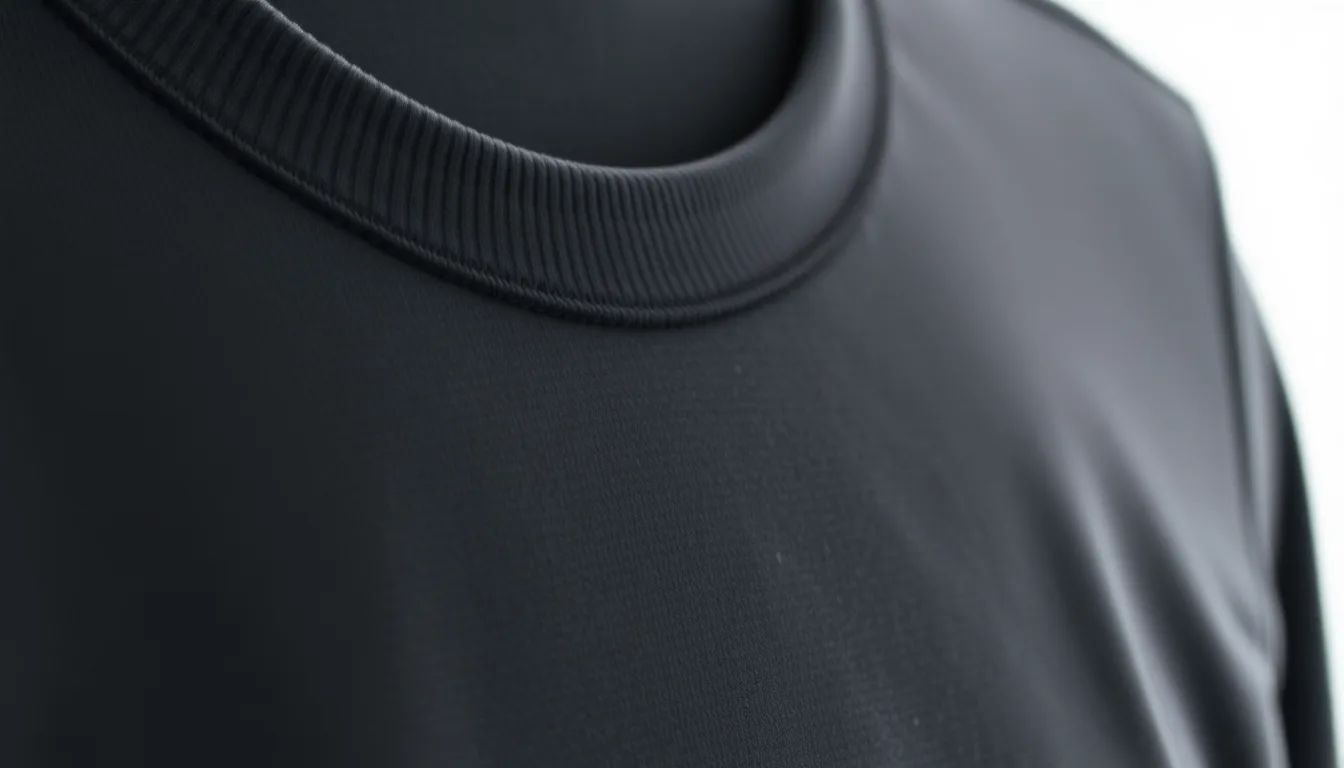
Fabric weight is measured in GSM, grams per square metre, and it is the spec almost nobody checks. Too light and a shirt turns transparent when wet and tears at the seam. Too heavy and it drags and traps heat. For a dance shirt, somewhere around 200 to 240 GSM is the sweet spot: enough body to hold its shape and stay opaque through sweat, light enough to breathe and move. We went deep on why weight and stretch direction matter together in 220 grams, four directions.
Flatlock seams and no hardware
This is the detail that separates dancewear from activewear. In a partner dance your shirt touches another person, so seams and fasteners matter in a way they never do at the gym. Flatlock seams lie flat against the skin instead of ridging up and chafing over hours. And hardware, zippers, studs, exposed buttons, has no place on a dance shirt, because it catches sleeves and scratches the forearm and back where hands land. We explained why we built a shirt with no hardware at all, and it is the first thing your partner will quietly notice.
Fit: slim, not tight
The best dance shirt fits close enough to show your frame and move with you, without binding. Too baggy and it bunches where hands land, flaps on the spin, and hides your lines. Too tight and it restricts the breath and reveals everything under stage light. Slim and clean, lying flat at the rib and shoulder, is the target. Fit is the one thing you cannot read off a label, so try the reach test: arms overhead, then across the body. If the hem lifts off your waist or the shoulder pulls, it is wrong.
We built the Corda against this exact checklist: four-way nylon-spandex stretch, moisture-wicking, 220 GSM, flatlock seams, zero hardware, cut slim to lie flat at the rib. Not because it is our list, but because it is the list every dance shirt should be measured against.
Common questions
What should I look for in a dance shirt?
Four-way stretch, moisture-wicking synthetic fabric, a weight around 200 to 240 GSM, flatlock seams with no hardware, and a slim fit. Construction matters more than colour or print for a shirt you will sweat and move in.
What is the best material for a dance shirt?
A polyester or nylon base blended with spandex. The synthetic base wicks sweat and dries fast, the spandex gives four-way stretch. Avoid 100 percent cotton, which holds sweat and restricts nothing but your comfort.
What GSM is best for a performance shirt?
Around 200 to 240 GSM for a dance shirt. Lighter than that can turn sheer when wet and tear at seams. Heavier traps heat and drags. The mid-range holds shape, stays opaque through sweat, and still breathes.
Why does a dance shirt need flatlock seams?
Flatlock seams lie flat against the skin instead of ridging up, so they do not chafe over a long session. In close hold they also sit smooth where a partner's hand and arm rest, which a bulky seam does not.
Should a dance shirt be tight or loose?
Slim, not tight, and not loose. Close enough to show your frame and move with you, without binding or revealing too much. Try the reach test: if the hem lifts or the shoulder pulls when you reach overhead, the fit is off.
Written by a Qanvero westie. We have owned the shirt that failed every one of these tests, which is roughly why we ended up making our own. The brand is by dancers, for dancers.
A checklist settles the shirt. It does not settle the rest. What to wear for partner dancing puts it back in the context of the whole outfit.