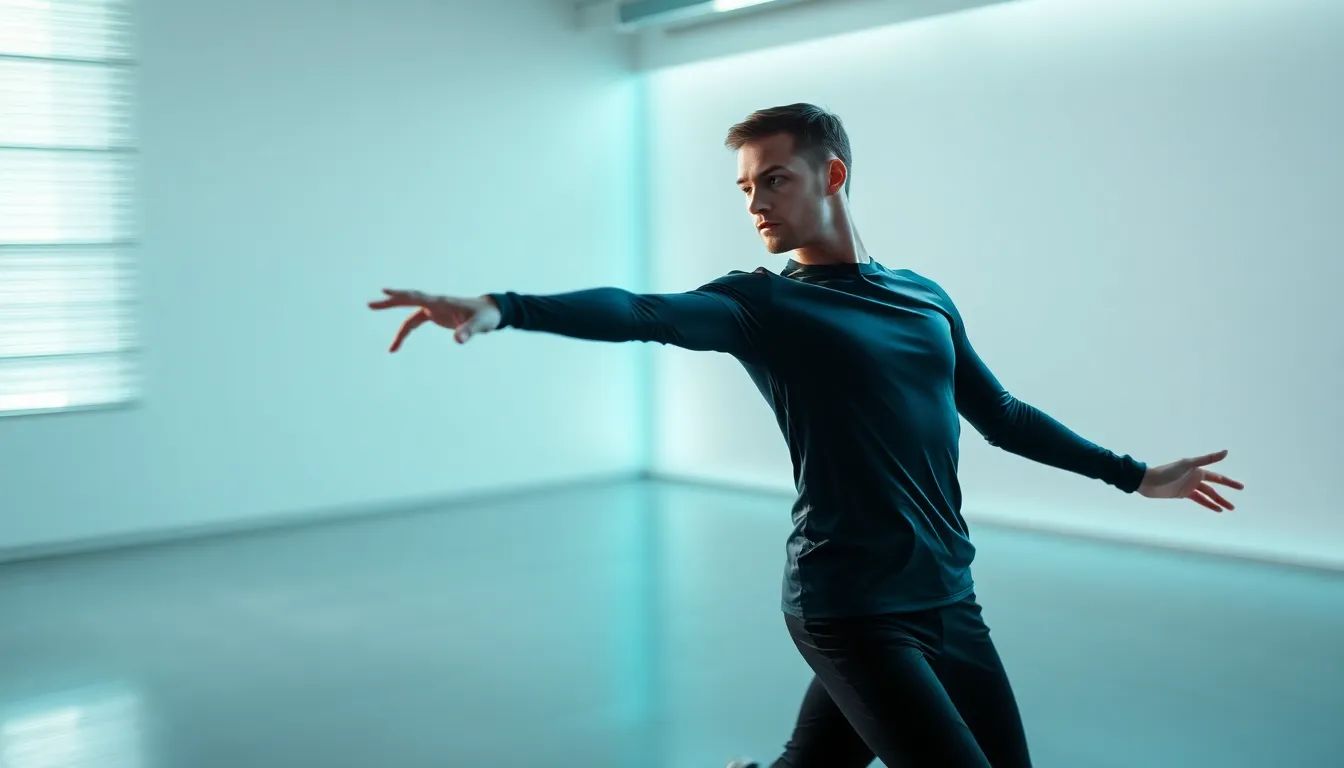
You can dance in gym clothes, and plenty of people do every week. A Dri-FIT tee and running shorts get you through a beginner class, and nobody on the floor is grading your kit. The mismatch shows up later, at hour two of a real social, with your arms overhead in a spin and a partner's hand flat on your back in the close hold.
Gym clothing is engineered for a job that is not dancing. It is built for a short, solo, mostly vertical workout. Social dance is long, partnered, and moving in every direction at once. The garment that wins one of those jobs is rarely the one that wins the other, and the gap is widest exactly where dancers spend their night.
What gym clothes are actually built for
A gym session is a sprint. Forty to sixty minutes, mostly up-and-down movement, a known set of planes. Activewear is tuned for precisely that: wick a heavy burst of sweat, stretch for squats and presses, then go in the wash. The design target is one intense hour, alone, in an air-conditioned room.
That is a strong design for what it is. The same moisture-wicking tech that keeps a runner dry helps a dancer too. The trouble starts when you take a garment optimised for a one hour solo workout and ask it to run a six hour partnered marathon in the tropics.
How dancing asks more of a shirt
Dance is multi-directional. You reach overhead, you rotate through the spine on a spin, you change levels, you travel across the slot and anchor back. A leader's arm crosses a follower's shoulders. A follower's hand rests on a bicep through a whole song. None of that happens on a treadmill.
Then there is time. A social runs four, six, sometimes eight hours, and the room in Singapore is warm and humid before the music even starts. The shirt is not managing one sweat spike. It is managing a slow continuous soak across a whole night, with a new partner every few minutes who is close enough to feel all of it.

Where gym tops fail on the floor
Start with hardware. Many gym and running tops carry a zip at the collar or a pocket, plus heavy flatlock seams across the shoulders. In the gym they are invisible. In the close hold a zip pull scratches a partner's arm and a thick seam rubs raw over a long night. We built a whole piece around why a dance shirt should have no hardware.
Then the cut. Gym tops are often boxy or shaped for a forward-leaning posture. Lift your arms fully overhead and the hem rides up while the shoulders bind. A dance top has to let the arms go straight up and the torso rotate without the whole shirt shifting. Add the look, since a loud gym logo and sponsor-panel styling read wrong at a social where people dress with some intent.
Where the gym and the floor do overlap
This is not an argument for throwing out everything you own. A plain, well-fitting technical tee with no hardware and a clean look can carry you through plenty of social dancing, and a good sports fabric beats a cotton tee on most counts. If a gym piece happens to tick those boxes, wear it.
The point is that those boxes get ticked by accident with gymwear and on purpose with dancewear. One is designed around a treadmill. The other is designed around a partner, a spin, and hour six. Once you stop relying on luck, the difference stops being subtle.
What a dance top needs that gym tops skip
A dance top earns its place with four things the gym never has to solve. No hardware in the contact zones, so nothing scratches or catches a partner. A cut that frees the arms overhead and lets the torso rotate. Breathability tuned for sustained heat rather than a single sweat burst. And a look that belongs at a social rather than at a squat rack.
That is the exact brief behind the Corda, a slim breathable knit with no zips or buttons where partners make contact, made for Singapore heat and the full run of a night. It is the same reason your dance clothes matter more than most dancers assume when they grab a gym tee on the way out the door.
Common questions
Can you wear gym clothes to dance class?
Yes for a beginner class, with a caveat. Pick a plain technical top with no zips or hard seams and a clean look, and avoid anything boxy that rides up when your arms go overhead. For a long social rather than a class, the limits of gymwear show much faster.
What is the difference between dancewear and activewear?
Activewear is built for short solo workouts in mostly vertical planes. Dancewear is built for long partnered movement in every direction, which means no contact-zone hardware, a rotation-friendly cut, sustained breathability, and a look that suits a social.
Is activewear ok for dancing?
Some of it is. A no-hardware technical tee with a slim, mobile cut works well. Gym pieces with collar zips, bulky seams, or boxy shapes tend to scratch partners or bind on overhead moves, so those are the ones to leave at home.
Do I really need special clothes for dancing?
You do not need them to start, but you feel the difference fast once socials get long. The jump from a random gym tee to a top built for sustained heat and real partner contact is the difference between fighting your shirt at hour five and forgetting you have one on.
Gym clothes are not bad clothes. They are the right answer to a different question. The moment your dancing turns long, partnered, and warm, the question changes, and a shirt built for a solo hour on a treadmill is answering the wrong one.
Qanvero builds for the question the gym never asks, which is how a top behaves at hour six of a humid social with a partner close enough to feel every seam. If that is the dancing you do, the Corda was made for it.
Written by a Qanvero westie. We have danced socials in borrowed gym tees and felt every zip and seam by hour three. The brand is by dancers, for dancers.